
Plant-Source Vitamin D3 matters: sustainability to suitability
November 5, 2025
Merry Christmas from ProTec Nutra
December 9, 2025You will hear us talk about this a great deal, and it is something we are incredibly passionate about. We want to use this article to explain why we feel so strongly about the need to avoid Soy and Soy derivatives, and how we are able to utilise better and sustainable alternatives.
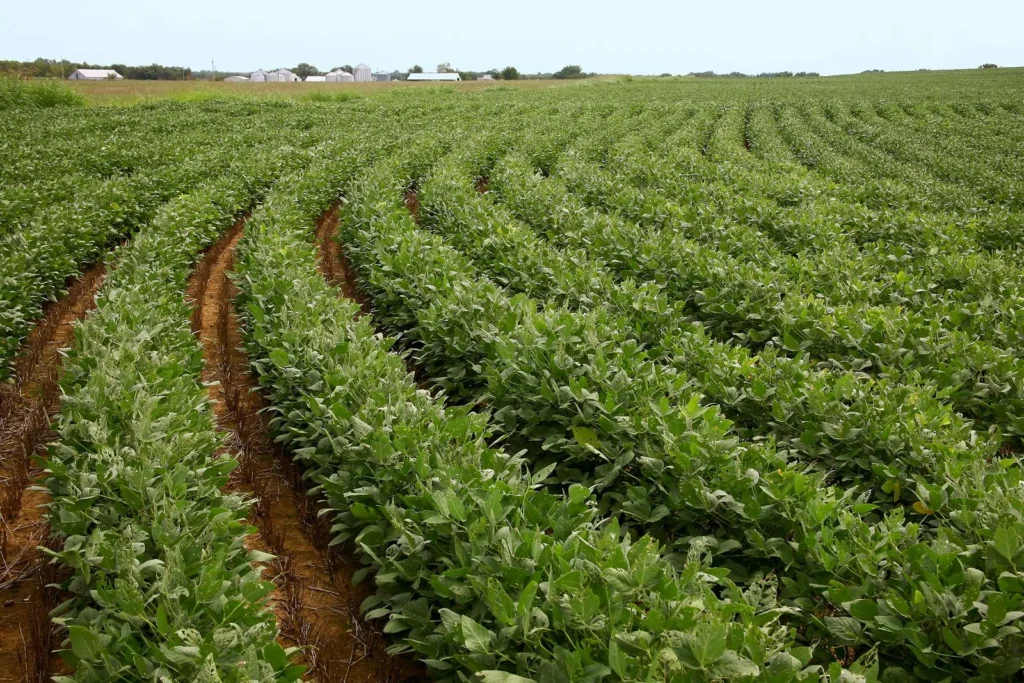
Soy is one of the most common ingredients used in the global food and supplement industries. It is a source of protein, oil, and various compounds such as Phytosterols and Tocopherols (vitamin E) that are used widely. However, to say Soy is not without its problems would be an understatement. From allergen concerns to environmental challenges, its widespread use raises important health and sustainability questions.
We avoid soy and soy derivatives entirely in our Plant-Source Vitamin D3 ingredients, opting instead for pine-sourced Phytosterols and sunflower-derived Vitamin E. Here’s why.
Soy as an allergen
Soy is recognised as one of the “Big 8” major allergens, responsible for the majority of food-related allergic reactions worldwide. Soy allergy can trigger immune responses ranging from mild symptoms (like itching or hives) to severe reactions such as anaphylaxis (Savage et al., 2010).
Even more importantly, allergenic soy proteins and peptides can persist in soy derivatives used in food and supplement manufacturing. While processes such as refining or purification may reduce these compounds, they don’t always eliminate them completely. Studies have shown that trace allergenic residues can remain in ingredients derived from soy, including lecithin, phytosterols, and tocopherols, potentially posing a risk to sensitive individuals (L’Hocine & Boye, 2007).
This is one of the reasons we’ve chosen to keep soy and its derivatives out of our production entirely.
The negative environmental impact of Soy
Beyond its allergenic properties, Soy production has a significant environmental footprint that many people are completely unaware of.
1. Deforestation and habitat loss
Soy cultivation is one of the leading drivers of deforestation, particularly in South America. Vast areas of the Amazon rainforest, Cerrado, and Gran Chaco regions have been cleared to make way for soy farms. This large-scale land conversion contributes to biodiversity loss, carbon emissions, and disruption of local ecosystems (FAO, 2021; WWF, 2022).
3. Long and complex supply chains
Global soy supply chains are complex, spanning multiple countries and involving various intermediaries. This makes traceability and verification of sustainable practices difficult. Even soy labelled as “sustainable” can be linked indirectly to deforestation through shared processing and transport networks. Some companies talk about utilising Soy production waste streams, but of course these are still spanning from potentially problematic and troubling initial supply chains (Trase, 2020).
What We Use Instead: Pine-Derived Phytosterols
In our Phytosterol Vitamin D3, we source phytosterols from Pine, not soy.
Sustainable and responsible forestry
Our Pine Phytosterols are obtained as by-products of the sustainable forestry industry. The trees used are grown in responsibly managed forests, in regions where forestry is carefully regulated under systems such as the Forest Stewardship Council (FSC) and Programme for the Endorsement of Forest Certification (PEFC).
These forests are managed for long-term ecological balance – meaning that for every tree harvested, others are planted or naturally regenerated. No additional deforestation or land conversion occurs to support phytosterol production.
High Purity and Traceability
Each batch of Pine Phytosterols is traceable back to its source, and the extraction process yields a clean, consistent, and soy-free raw material suitable for producing our pure, Plant-Source Vitamin D3.
The result is a sustainable, non-GMO, allergen-free source of Phytosterols – and an ingredient that aligns with both our environmental and ethical values.
Sunflower-derived Vitamin E: a cleaner alternative to Soy
Vitamin E (tocopherol) is a powerful antioxidant that we add to our Plant-Source Vitamin D3 ingredients to support stability. Many Vitamin E ingredients on the market are sourced from Soy, but we’ve chosen a better alternative: sunflower-derived tocopherol.
Sunflower-derived Vitamin E offers several advantages:
- Completely allergen-free. It contains no Soy, no Soy-derivatives, and no other allergens.
- Non-GMO and fully traceable to responsibly cultivated sunflower crops.
- High antioxidant potency, ensuring stability and shelf life.
Sunflowers are widely grown across Europe and North America and require less intensive inputs than soy, contributing to a lower environmental footprint.
Key References
- Savage, J. H., Kaeding, A. J., Matsui, E. C., & Wood, R. A. (2010). The natural history of soy allergy. Journal of Allergy and Clinical Immunology, 125(3), 683–686.
- L’Hocine, L., & Boye, J. I. (2007). Allergenicity of soybean: New developments in identification of allergenic proteins, cross-reactivities, and hypoallergenization technologies. Critical Reviews in Food Science and Nutrition, 47(2), 127–143.
- Food and Agriculture Organization of the United Nations (FAO). (2021). The State of the World’s Forests 2020.
- World Wildlife Fund (WWF). (2022). Soy and Deforestation: Understanding the link between soy production and forest loss.
- Trase (2020). The State of Forest-Risk Supply Chains: Soy 2020.